
Working While Studying in Germany 2026: The Ultimate Career & Legal Blueprint
An Incredible Deep Dive into Salaries, 140-Day Rules, and Professional Growth. Verified by Articles Insight.
Navigating the German labor market as an international student requires more than just a resume; it requires a technical understanding of residency laws, social security, and tax brackets. In this definitive guide to Working While Studying in Germany 2026, we break down everything from the new 140-day rule to securing a high-paying Werkstudent position. Before you start earning, ensure your financial foundation is solid by reviewing our Ultimate Fintiba Blocked Account Guide.
1. The Legal Framework: New 2026 Regulations
In 2026, the German government implemented the “Fachkräfteeinwanderungsgesetz” update, which directly impacts Working While Studying in Germany 2026. For students from non-EU countries like Egypt and Oman, the primary constraint is the work permit attached to your student visa.
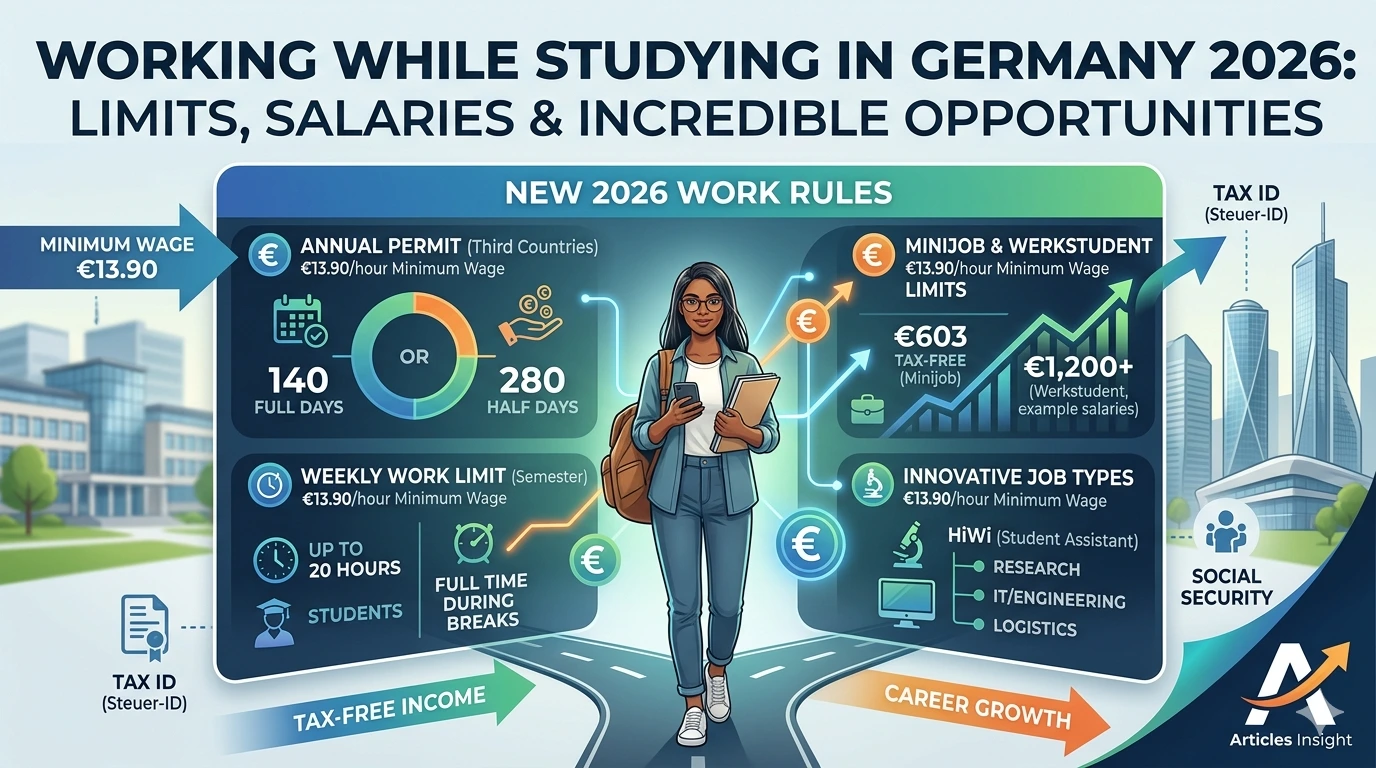
The most incredible update is the expansion from 120 to 140 full days (or 280 half days) per year. This technical change allows students to earn significantly more during semester breaks. However, tracking these days is your responsibility. Our Fintiba Review 2026 notes that maintaining an accurate financial record is key to visa renewals at the Ausländerbehörde.
2. Salary Structures and the €13.90 Minimum Wage
As of 2026, the statutory minimum wage has risen to €13.90 per hour. This means that even a basic Minijob contributes substantially to your Cost of Living in Germany.
For those Working While Studying in Germany 2026 in technical fields like IT or Engineering, the hourly rate often jumps to €18 – €25. These “Werkstudent” roles are the “gold standard” for students. You are not just a worker; you are a professional-in-training. For seamless salary deposits, you must use the Best German Bank for Fintiba integration to avoid high transaction fees.
Detailed Comparison: Student Job Types in 2026
3. Taxation and Social Security: A Technical Guide
One of the most complex parts of Working While Studying in Germany 2026 is understanding the “Steueridentifikationsnummer” (Tax ID). Every student worker is assigned to a Tax Class (usually Class 1 for singles).
If you stay within the €603 Minijob limit, you pay zero taxes. However, if you earn more, you might see deductions for pension insurance. The incredible part? Most students can get these taxes back by filing a tax return (Steuererklärung) the following year. This is a vital technical step to maximizing your Working While Studying in Germany 2026 income.
4. Health Insurance Integration (Fintiba Plus)
When Working While Studying in Germany 2026, your health insurance status might change. If you work more than 20 hours a week (only allowed during vacations), you are no longer considered a “student” by the insurance providers and must pay full employee rates. We detail the best student insurance plans in our Fintiba Plus & Health Insurance Guide. Ensuring your insurance is correctly linked through your Account Activation is essential for legal compliance.
5. Strategies to Find Incredible Jobs in 2026
Finding the right role while Working While Studying in Germany 2026 requires using the right platforms. While LinkedIn and Indeed are global, sites like StepStone and XING are dominant in Germany. Additionally, checking your university’s “Stellenwerk” is an incredible way to find HiWi positions. Our Egypt & Oman Student Portal often lists exclusive opportunities for Arabic-speaking students in Germany.
👨💻 Expert Verdict: The Insight Factor
At Articles Insight, we have analyzed the 2026 data. The verdict is clear: Working While Studying in Germany 2026 is the best way to integrate. Beyond the €13.90 wage, the professional network you build is worth more than the salary. Focus on Werkstudent roles in your field of study to ensure a high-speed transition to a full-time career after graduation.
FAQ: Working While Studying in Germany 2026
Q: Can I work full-time during my semester break?
A: Yes! This is a key technicality of Working While Studying in Germany 2026. During lecture-free periods, the 20-hour-per-week limit is lifted, though the 140-day annual limit still applies.
Q: What happens if I exceed 140 days?
A: Exceeding your limit without a specific permit from the Ausländerbehörde is a serious violation of your visa terms. Always track your hours in a spreadsheet.
Q: Do I need a separate work visa?
A: No, your student residence permit already contains the technical authorization for Working While Studying in Germany 2026.
Conclusion: Your Path to Professional Success
Ultimately, Working While Studying in Germany 2026 is about more than just money. It is an incredible opportunity to learn the German work culture, master the language, and build a technical foundation for your future. Trust Articles Insight to provide the most accurate, data-driven guides for your journey.